
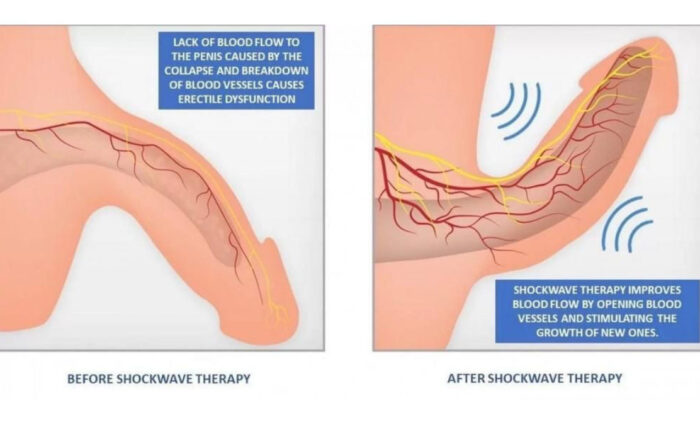

Combination Therapy for ED and Peyronie’s Disease: Evidence and Possibilities
When erections, curvature, length or confidence change, it is natural to look for more than one way forward. Erectile dysfunction (ED) and Peyronie’s disease can occur together, but they do not affect every man in the same way. A good plan starts with your symptoms, health and goals—not a promise that one protocol will work for everyone.
What has clinical-trial evidence?
Low-intensity shockwave therapy (ESWT) for erections. Sham-controlled studies have found improvements in erectile-function scores, particularly in men with blood-flow-related ED. The average benefit is usually modest, and results vary. The European Association of Urology guidance recommends considering it for selected men. ESWT is not a guaranteed cure and is not the right answer for every cause of ED.
Penile traction therapy (PTT) for Peyronie’s-related length and curvature. Device-specific trials offer real hope: a randomised RestoreX trial reported an average length gain of about 1.5 cm after three months of use. A controlled study of another device also reported gains. Results depend on the device, safe use and individual factors. A meta-analysis did not find a statistically significant pooled length benefit, so no gain can be promised.
ESWT for Peyronie’s pain. ESWT may help pain during the active phase. Some studies have reported plaque-size changes, but results are inconsistent. It has not been shown to reliably break up plaque or straighten curvature; European guidance does not recommend it for curvature correction.
What do we know about combining treatments?
Combining treatments can make sense when they address different goals. A randomised trial in men with diabetes-related ED found better erectile-function outcomes with ESWT plus a vacuum erection device than with either alone. This is encouraging, but it does not prove that every combination—or Shockwave Clinic’s full programme—will work better for every man.
At Shockwave Clinic, a personalised plan may include focused ESWT, traction, vacuum-based rehabilitation and selected adjuncts such as EMTT, PRP, infrared-assisted vacuum therapy or carboxytherapy. Not every patient needs every treatment. PRP and other adjuncts have more limited evidence for ED or Peyronie’s disease than ESWT for vasculogenic ED or device-specific traction for length.
Where EMTT fits
EMTT (extracorporeal magnetotransduction therapy) uses magnetic pulses; ESWT uses acoustic shockwaves. We offer EMTT as a possible adjunct, but its specific benefit for ED and whether adding it improves results beyond ESWT alone have not yet been established in clinical trials. An “electromagnetic” shockwave device is still an ESWT device, not proof that ESWT plus EMTT is superior. We hope future studies will clarify how best to combine them.
A hopeful but realistic next step
Progress might mean firmer erections, less pain, preserved or improved length, a more manageable curve or more confidence in intimacy. We assess the likely causes, agree on the outcomes that matter to you and review your response over time. Medication, medical risk-factor management and urological treatments remain important options where appropriate.
Book a confidential consultation to discuss your options. This article is general information, not a personal treatment prescription. Results vary, and no treatment combination can guarantee a specific outcome.


